Autoclaves are an important feature for many different settings, where they play an important role in cleaning and sterilising equipment. But it’s important to understand the different classes of autoclave to make the right choice for your setting.
What are the different classes of autoclave?
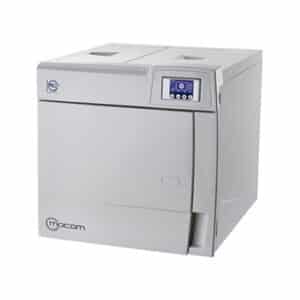
In hospital settings, laboratories, and other areas where sterilisation is crucial, autoclaves are indispensable tools. They are essential in the process of removing microorganisms from tools and equipment, such as bacteria, viruses, and spores. A variety of autoclave classes, including S-class, B-class, and N-class, are created to satisfy various sterilisation requirements while maintaining safety regulations.
S-Class Autoclaves
S-class autoclaves, commonly referred to as “sterilisers,” are made to sterilise solid equipment that can endure high temperatures and pressure. Dental offices and small clinics frequently utilise these autoclaves and these are known to be straightforward and simple to use.
The key features of S-Class autoclaves include:
- Sterilising solid, unwrapped instruments.
- Operating at a temperature of 134°C and pressure of 2.1 bar.
- Suitable for non-packaged items.
- Typically feature a quick sterilisation cycle, which is ideal for busy environments.
- The S-class autoclave ensures effective sterilisation and meets the essential requirements for sterilisation outlined by healthcare regulatory bodies.
B-Class Autoclaves
B-class autoclaves, sometimes referred to as “Vacuum Sterilisers,” are intended for sterilisation requirements that are more intricate. They are appropriate for dental offices, hospitals, and larger healthcare institutions since they can handle a greater variety of equipment and materials, including porous things and hollow devices.
The key features of B-Class autoclaves include:
- Sterilising solid, porous, and hollow instruments.
- Operating at a temperature of 134°C and pressure of 2.1 bar.
- Utilising a vacuum system to remove air from the chamber, ensuring effective sterilisation.
- Equipped with multiple sterilisation programs, including pre-vacuum and post-vacuum cycles.
- B-class autoclaves are versatile and reliable, ensuring the highest level of sterilisation for a variety of medical instruments and materials.
N-Class Autoclaves
Unwrapped, solid instruments and other non-packaged things can be sterilised in N-class autoclaves, sometimes referred to as “Non-vacuum Sterilisers.” In places like research labs and some dentistry offices where hoover systems are not necessary, they are frequently used.
The key features of N-Class autoclaves include:
- Sterilise solid, unwrapped instruments.
- Operate at a temperature of 121°C and pressure of 1.1 bar.
- Ideal for environments where vacuum systems are not feasible.
- Suitable for instruments that can tolerate lower sterilisation temperatures.
- N-class autoclaves offer a cost-effective sterilisation solution for settings where the use of vacuum systems is not essential and where lower sterilisation temperatures are sufficient.
Here at Dental Decontamination we provide a range of top quality autoclaves from leading manufacturers, that are suitable for a range of professional environments. We also provide support and training too, including repair, maintenance and servicing. Why not get in touch to find out more?